Quote follow-up: the sales you lose by not calling back
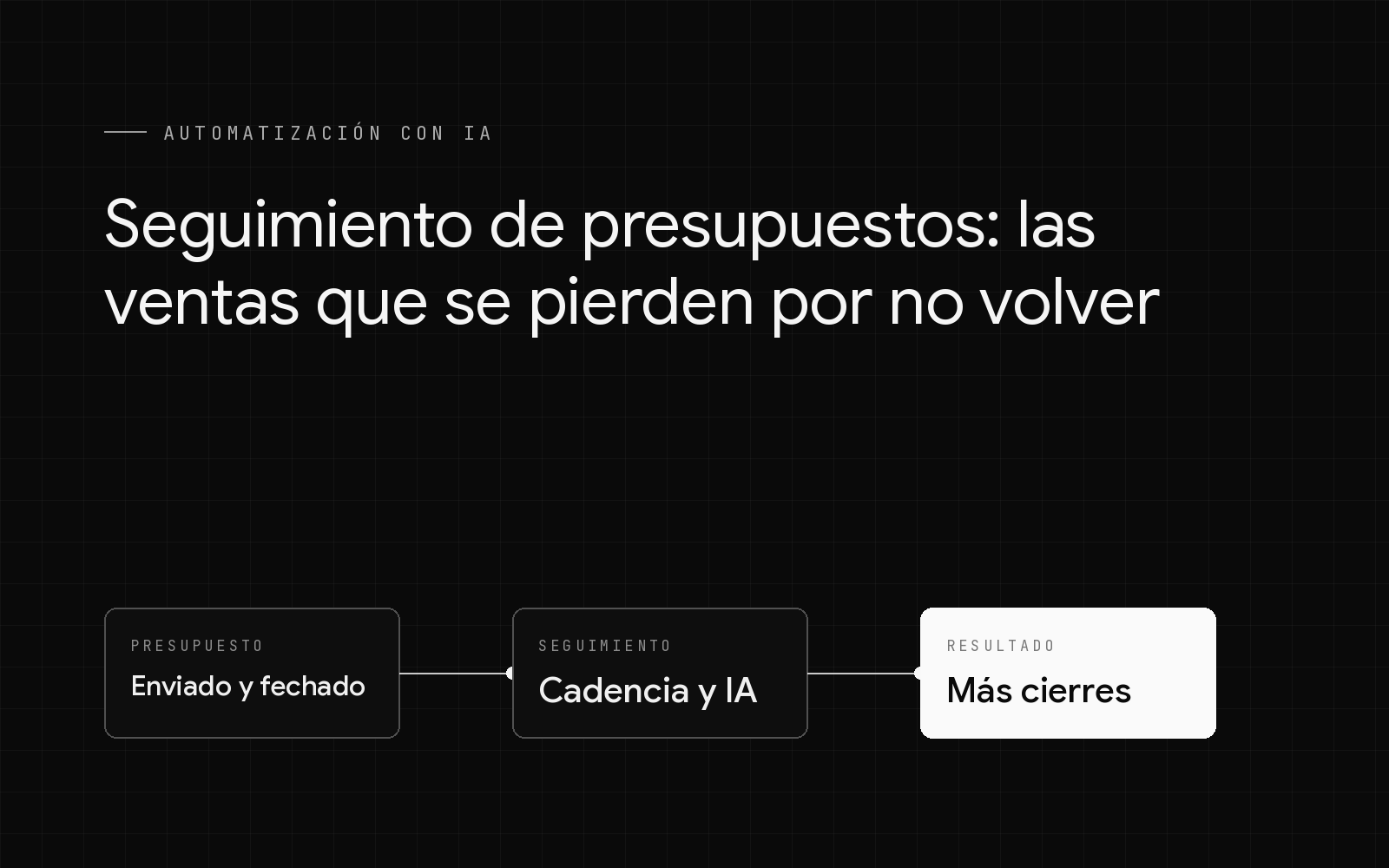
Quote follow-up is the process that defines what happens to each quote after it is sent: who contacts the customer again, when, through which channel and with what new value. In many small and mid-sized companies across LATAM that step depends on each salesperson's memory, and deals that were already halfway closed slip away. Fixing it takes three things: a single record of every quote, an agreed cadence and automatic alerts nobody has to remember.
Why deals stall after you send a quote
A sent quote is the most expensive stage of the funnel: the customer already reached out, the team already scoped the need and someone spent hours pricing it. Yet it is often where the sales process stops. The PDF goes out, the team waits, and if no reply arrives the quote sits forgotten in an inbox or a WhatsApp chat.
Research on inbound requests shows how common this is. A Workato study published in 2026, which submitted demo requests to 114 B2B companies, found that the average email response time was 11 hours and 54 minutes, and nearly one in five companies never replied by email at all. If the first response is already late, later follow-up usually gets even less attention.
In one sentence: most quotes are not lost on price, they are lost to silence.
How many times to send a quote follow-up
Conversica's sales effectiveness report, which tracked how 100 companies followed up on inbound leads over 22 days, recorded an average of only about two contact attempts per lead; just 21% made four or more. The same report notes that five to eight follow-ups significantly improve engagement, while going past twelve in that window starts to hurt.
Applied to quotes, a reasonable cadence looks like this:
- Day 0: send the quote with a clear expiry date and a proposed next step.
- Day 1–2: confirm receipt and offer a short call to answer questions.
- Day 5: add value: a similar case, a technical clarification or a scope alternative.
- Day 10: call to learn where the decision stands and who else is involved.
- Before expiry: let them know the quote is about to lapse.
- Close the loop: a final message that keeps the door open and records the loss reason.
Timing depends on ticket size and buying cycle. What does not change is that each step is written down and assigned.
What to say in each touchpoint
Effective follow-up brings something new every time. “Did you see the quote?” is easy to ignore. A message that answers a likely objection, proposes a smaller scope or confirms a delivery date gives the customer a reason to reply.
- Restate the problem, not the price.
- Offer alternatives such as phased delivery or different payment terms.
- Find the decision-maker: the person who asked is often not the one who approves.
- Ask for a no: knowing they chose another supplier is valuable information too.
What to measure
| Metric | What it shows |
|---|---|
| Quote close rate | Share of quotes that become sales |
| Time to first follow-up | Hours or days between sending and first contact |
| Idle quotes | Open quotes with no activity in the last seven days |
| Loss reasons | Price, timing, competitor or no response |
These fit the framework in our article on sales KPIs for small businesses. Idle quotes is usually the most revealing: it shows how much potential revenue is waiting for a call.
How to automate quote follow-up with CRM and AI
Start by keeping every quote in one place, with status, amount, send date and owner. A well-implemented CRM does that and schedules follow-up tasks the moment a quote goes out. On top of it, automation adds reminders and tasks, stage-based message templates for email or WhatsApp, and AI that summarizes past conversations, drafts the next message and flags the quotes with the strongest buying signals.
Tools like n8n or Make connect the CRM with email and messaging; our comparison of n8n, Make and Zapier explains which fits your volume. Automation supports the team: the relationship stays with a person, but no quote is left to memory.
Common quote follow-up mistakes
- No expiry date, which removes urgency and a natural reason to reach out.
- Always the same channel instead of mixing email, calls and messages.
- Not recording loss reasons, so pricing and scope mistakes repeat.
- Measuring only closed deals, when activity on open quotes predicts next month.
Behind these mistakes there is usually one cause: the sales process was never designed. It is the blind spot we see in many growing LATAM companies.
Frequently asked questions
How long should you wait to follow up on a quote?
Reach out within 24 to 48 hours of sending it to confirm it arrived and offer to answer questions. Then space contacts three to five days apart depending on the buying cycle, and schedule a reminder before the quote expires. A full week of silence usually cools the decision.
How many times should you follow up on a quote?
Conversica's research on inbound lead follow-up found that five to eight contacts significantly improve engagement, while the companies it studied averaged about two. For quotes, a sequence of five or six touchpoints, each adding something new, is a solid starting point.
Can quote follow-up be automated?
Yes. A CRM records each quote and creates follow-up tasks automatically, and tools like n8n or Make send reminders by email or WhatsApp. AI adds conversation summaries and suggested messages. The relationship stays with your team, but no quote depends on someone remembering it.
At Verzeen we work as part of your team to design the full sales process, from first inquiry to close: we bring every quote into one system, define the follow-up cadence and automate reminders with AI so each quote always has a next step. If you want to know how many sales are waiting for a call in your company, let's talk.